
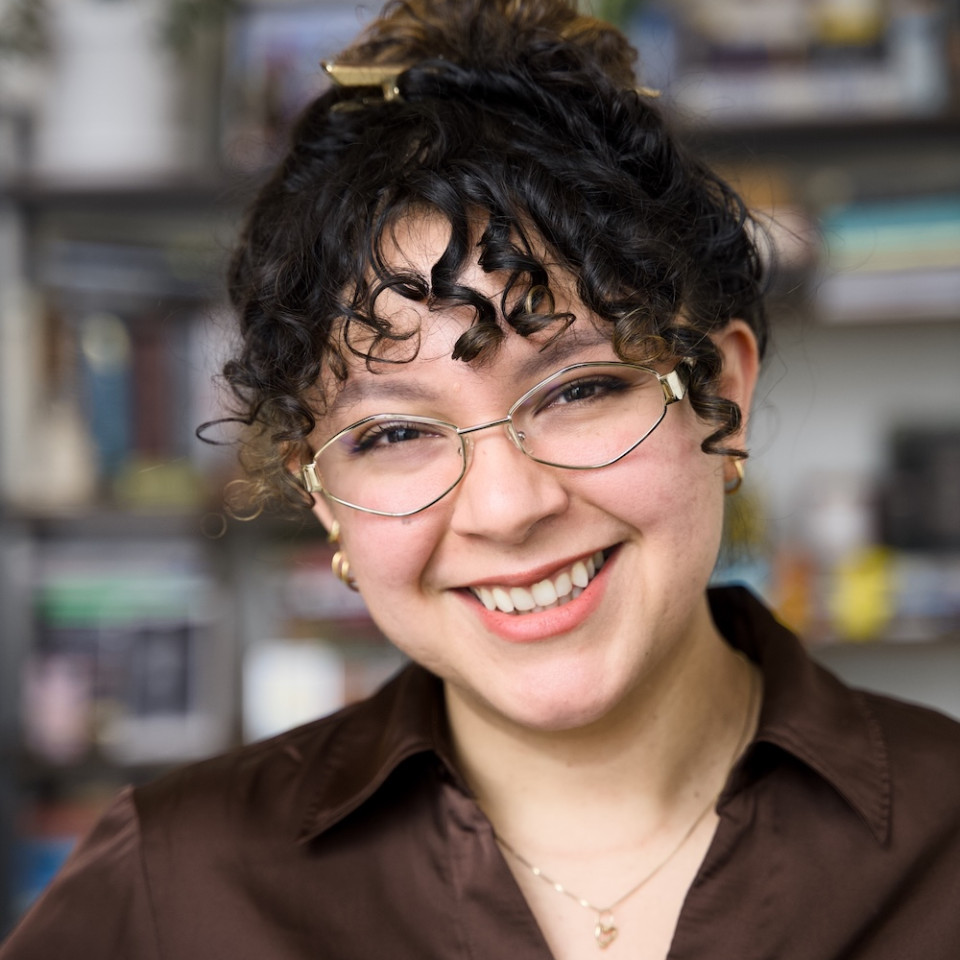
Member Spotlight: Constanza Salazar
News Member SpotlightElsa Lamere
Who are you and where are you currently located?
Constanza Salazar
My name is Constanza Salazar. I am currently located in Kitchener-Waterloo, Canada, just for a few weeks this summer.
Elsa Lamere
What brought you there and where are you located most of the time?
Constanza Salazar
Most of the time I'm based in New York City, in Brooklyn. I moved to the US from Canada, maybe about 12 years ago now, for work and school. I was doing my PhD at Cornell. I had to move and travel back and forth from Ithaca to New York City, which was quite the trip.
Elsa Lamere
Oh yeah, I bet. And how did you end up involved with the New Media Caucus?
Constanza Salazar
That's interesting. While I was doing my doctorate at Cornell, there was an opportunity that came up called the Judson-Morrissey Excellence in New Media Award. It's like a scholarship that New Media Caucus offers. It was for young scholars, artists, historians, whoever. So, I applied, and I got it back in 2019, which was nice. It was my first time hearing about the New Media Caucus, so when I got it, I was able to go to the conference called CAA, which is an art historian conference with artists and other things, usually based in New York City or sometimes Chicago. Once I was at the conference, they waived my fee and I got some extra money, which really helped with my schooling. The best part of it all was meeting everyone from the New Media Caucus. I got to meet the president and all the people from the different committees. Everyone was just so friendly and welcoming to me.
Elsa Lamere
That's awesome, and now you're on the committee, too. How long were you a part of the organization before you became a part of the committee?
Constanza Salazar
Yes, I am. After having such a nice experience at the conference, I decided to get involved a bit more. I started at the bottom level of the communications committee. I did a bunch of admin things here and there, e-mail newsletters, etc., for others on the committee. I sort of acted like a liaison between the different committees and in figuring out what should be put on the newsletter. So that's how I started. I saw the committee grow with different members and to different leadership. It was really interesting. I think I was one of the last ones until I moved on to a different committee.
Elsa Lamere
So I know you're an art historian; what does new media art specifically mean to you, and why is it one of your main focuses?
Constanza Salazar
That's a great question. I didn't start in new media until I got to Ithaca and began my doctorate. I found that new media offers so many possibilities of mixing genres of art. It’s very non-traditional in that way, and I found it exciting. Of course, it has its drawbacks because it is still considered a very new field, even though it's been around for a long time now. I think the issue is that it hasn't been fully recognized or absorbed into the art history proper. With new media, I think about possibility, excitement, collaboration, and how we can blend a bunch of different art techniques. It's exciting to think about how artists, especially the ones that I focus on, are thinking very critically about technology in day-to-day life. So that's what that means to me.
Elsa Lamere
That’s awesome. I saw that you're working on a book project right now, too. I would love to hear about that if you would like to share.
Constanza Salazar
Yeah, sure. Right now it’s called Poetics of Resistance: How Contemporary Art Reimagines the Future of Digital Technologies. It’s a long title; it might change before it’s published. The book project is a continuation, but also a different version of the dissertation I wrote. I'm very excited about it. I am still polishing the manuscript until I send it off to the editor.
The book is essentially about four different technologies: biotech, internet, surveillance, and artificial intelligence. This is all stemming from the point of view of the 1990s to the present. It’s thinking about how artists are negotiating between the promises that technology often makes, for example, it's going to be more efficient, it's going to make us freer to do other things, etc., but they're negotiating between these and also the drawbacks. They're thinking very critically. A couple of chapters talk about hacking, for instance, artists that hack into different systems and who try to subvert them. Other artists do performance art, hiding behind surveillance cameras, creating their own paths, quite literally, across different viewpoints and streets. There are a lot of those artists that came up around the 2010s.
My final chapter is on new media art proper, and more about how artists negotiate between artificial intelligence and how they're creating systems that are much more holistic, and more welcoming to people of color and the LGBTQ+ community as well. They're creating systems that are much more useful for them, as opposed to systems that discriminate against minorities. So, they've been challenging these systems, trying to create new ones, and thinking about possibilities these technologies could have. So that's what the book is about.
Elsa Lamere
That's great. I'm excited for it! And do you have any other projects you would like to talk about?
Constanza Salazar
Yes, I do. Right now, I'm working at Hunter College, and I got a social practice grant from the CUNY system, of which Hunter College is a part of. I applied with a sound map project in mind, which is essentially a map of the world, or a city, that holds audio recordings. The focus of the map I made is nostalgia, and things that make you nostalgic about your childhood, or about anything. Oftentimes, certain sounds make people recall the past, a beautiful memory, or even a sad memory. I have had a couple of entries already, and it's an ongoing project. You can find it on my website, under a tab that says ‘SoundMap Project’. Everyone is invited to contribute. There was a person who recorded cicadas when they went to China to visit their family, because they reminded them of their childhood. There was another person who recorded herself singing a lullaby that her mother used to sing to her when she was a child. There's a bunch of different types of sounds people have recorded. There's one that was of the ocean breeze and waves crashing in El Salvador. I want everyone to know and to please participate. It could be anything, honestly. And you can record right on your computer, or you can record via the app.
I'm in collaboration with two fellows from the UK, Dylan Diego Bradbury and Oliver Jonas, who built an app called Audiospaces. I contacted them on the internet because I came across them and found that their project was one I had also been wanting to do. They had created the infrastructure already, so I asked if we could collaborate. They have multiple different worlds and collaborators. Anyways, I am very excited to see where it goes.
Elsa Lamere
That's so cool. I'm definitely going to tell friends about it. What a neat project.
Constanza Salazar
And I will just insert this as well. If you do contribute something, I do not believe in extractive labor, so you will be getting some funding for that, which is always nice.
Elsa Lamere
That’s really awesome. And what is your website name for people to find you?
Constanza Salazar
Sure, yeah, everything lives on my website. That's constanzasalazar.com.